Tuesday, February 28, 2012

Carnivorous tree

noddies nesting IMG_3904
Noddies nesting at Lady Elliott Island

I don't have a photograph of the tree, but there was a carnivorous tree on Lady Elliott. Its seeds burst into a mass of sticky things. When small birds and big birds get covered in them, their wings are unable to be freed and the bird dies, typically within the root zone of the tree, thereby enriching the sand of this coral island and the soil about the tree.

Nice to think that plants are so brilliantly evolved to use animals. It seems a nice turnabout.

Monday, February 27, 2012

Losing heart

Poinsettia DSC_0482
Poinsettia

I have gone very cold on the Australian Museum's rapid digitisation project. Possibly because I am not very good at using the databases, which are very clumsy to correct and still full of logical errors... leading data to be easily destroyed.

Yet the need to continue is very evident. I flicked to this picture of Katipo rubivenosa, and wanting to find out more, I googled Katipo rubivenosa and found exactly nothing, except for the image in a discussion of the project. And so far, this seems to be the case for most of the insects we have photographed.

It cannot be the case that such information is so impossible to find, only that I am poor in finding it...

I have also gone cold on my camera. Nikon does not supply a printed verson of the reference manual which is pretty poor. I hate trying to read documents on my computer. And I am not happy with my photographs.....

Butterfly poster
Plate 6 in Wiener Entomologische Monatschrift 3 (1859). Poster on the door of the digitisation lab.
(Plate identified by Ian Riley) But as Ian says
"Actually the names of most of these are quite obscure. Charaxes bohemani seems to get a bit of coverage on the web, and its name has stood since first described by Cajetan and Rudolf Felder (father and son) in 1859. Despite this, in the Zoological Record there is only two papers referring to the species, one in 1870 and the other in 1985. Your photo is Plate 6 in Wiener Entomologische Monatschrift 3 (1859). The Felders had four papers in that volume entitled "Lepidopterologische Fragmente" I, II, III and IV."

Which reinforces my point.

Friday, January 27, 2012

on Barrenjoey Headland

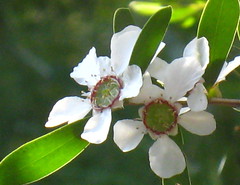
I was trying to get a decent photograph of this tea-tree. So far, using Rachel's camera produces better photos than I can using my fancy Nikon SLR....

Now, in summer, the riot of flowering heath of late winter has gone, but there were still some lone flannel flowers and native fuchsia. I was chasing this tea-tree, but the rain kept on coming down, so I had to put my camera away and come away..

DSC_0391
Leptospermum

DSC_0399
Looking up the Pittwater from Barrenjoey

Dead Banksia and fruit DSC_0409
Looking across to West Head in the misty rain

Saturday, November 19, 2011

Away again

DSC_0003
Strip of vineyard along the road, Bedford Park, SA.

DSC_0002
Waiting for my flight to Brisbane

Not sure why I started this. I was in Adelaide for a geostatistics course given by Peter Diggle. The course was really good. But when you organise to go, you organise the least possible time because you don't know anyone and you don't know what to do.

I find getting from A to B extraordinarily stressful, so I tend to organise not to linger which is ultimately pretty silly. The course was at Flinders University which is some way south of the city, and I had hoped to stay at the university to avoid public transport. Perhaps for want of something important to stress over, I get myself ridiculously worked up about catching buses or whatever.

Adelaide was looking very beautiful. Its street trees were green and lush and growing well and from the University we could see the sea. And I am sort of sorry I didn't get to dip my toe in that lovely sea.

I took lots of photos of the most beautiful river red gums I have ever seen, but my photos were not particularly good. So the photos you get are of the strange little piece of vineyard 5m by 100m running along a suburban road, with its very old, well trellised and very healthy vines, and a view of the Adelaide Hills (?) from the airport

Tuesday, October 18, 2011

Digitisation Lab, Australian Museum

en.wikipedia.org/wiki/Gallaba_ochropepla
Gallaba ochropepla. One of the Gallaba species in drawer 184.

I have been volunteering at the Australian Museum. They have trained perhaps 100 or so people to digitise the collections. (We are volunteers but the project is managed by a permanent officer.) First cab off the rank has been entomology, and today I teamed with Clare to photograph Drawer 184 which featured the Gallaba genus.

Rhiannon, one of the project leaders has now started a blog (Rhiannon's blog), and you can see what we have been doing here. It is an exceedingly fiddly task. Each specimen in a drawer has all its labels removed using tweezers. The labels are put onto a piece of plastic foam so that all the information is displayed, while the insect is placed beside. An extra label (our K label) is added, and when the insect and its associated information has been photographed, the labels are rethreaded on the pin and the specimen replaced in the drawer.

Many specimens are over a hundred years old and most are quite fragile. The aim of the exercise is to make the entomology collection (6 million specimens (?)) available and to obviate the need to pull out the actual physical specimens.

I was pleased with our work today. We took good photographs (but we did manage to damage 6 specimens..) I had hoped to find images of our moths on the internet, but only a single reference to just one of the three species we photographed in drawer 184 popped up on my Google search for "Gallaba". (Now found references but no photographs for G. dysthryma, and poor photographs for G.eugraphes). Utimately our work will show the animal, its species name, when, where, and by whom it was collected.
--------------------------------------------------------

The photograph is of my driveway using the effects menu ("sketch) on my new Nikon D5100. Fun software, but I hope that is not what I was paying for, but rather for the lens...

Driveway DSC_0021
Driveway, Palm Beach.

Tuesday, October 11, 2011

morally ugly movie, lovely park.

Melaleuca DSC_0075
Paperbark Tomato Lake, Belmont, WA

Gums on the lake DSC_0014
Gums on Tomato Lake, Belmont, WA

Poppy was at daycare so we took the other little girls to "The Zookeeper", marred by the gratuitous nastiness of the hero when wooing his girl. Which we followed by going to Tomato Lake. First time the experience of taking the girls to the park had something for the adults and something for the kids. We walked around the lake, looking at the waterbirds and just enjoying the park, which had lovely gums, banksias and paperbarks and an impressive swamp.

Ibis DSC_0037
Egrets roosting

On the spider DSC_0008
Jamie and Ellie on the spider

Sunday, October 9, 2011

Clair's dolls

DSC_0048

DSC_0056

I went to Bayes on the Beach, and asked Clair if she would give me a lift from Brisbane, so after the workshop, we went to her place.

She has a whole room full of these lovely dolls made by her from scratch.

The workshop and the conference were terrific, but Surfers Paradise could well be the most vilely ugly and depressing place on earth.